
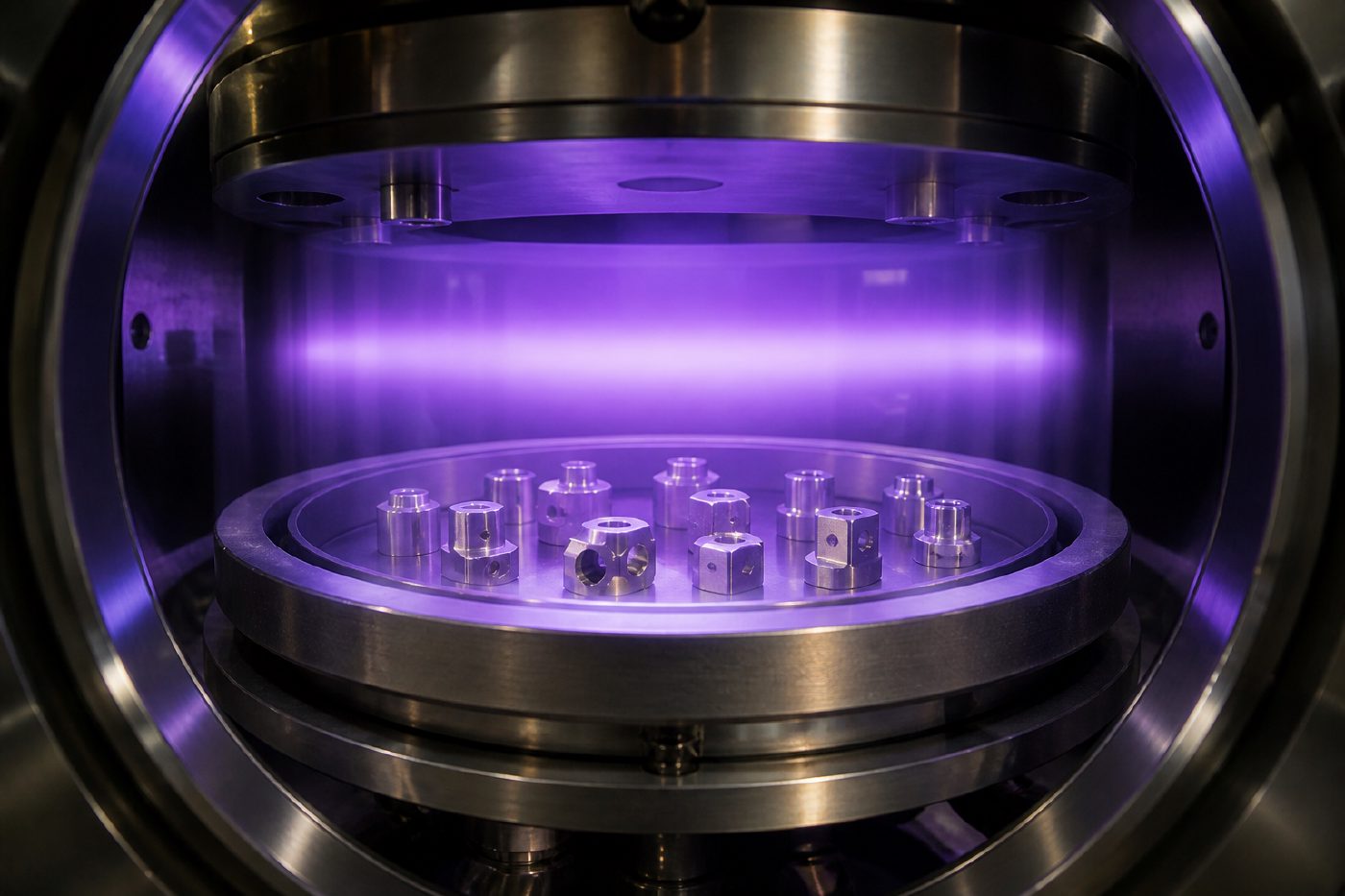
Plasma Polymerized Chemical Vapor Deposition (PPCVD) is a thin-film coating technology that transforms material surfaces at the molecular level. Using plasma energy to deposit ultra-thin functional coatings, PPCVD enhances durability, corrosion resistance, water repellency, electrical insulation, and other critical surface properties — without altering the size or geometry of the underlying component.
The process works across metals, plastics, ceramics, textiles, electronics, and complex 3D parts, making it a versatile, solvent-free solution for industries seeking high-performance, environmentally conscious surface engineering.
How It Works
A precursor gas enters a low-pressure chamber where plasma energy activates and fragments its molecules. These reactive species recombine and deposit onto the substrate as a crosslinked thin-film coating. Because the chemistry is controlled at the plasma level, surface functionality can be precisely tailored to the application.
Key Benefits
- Ultra-thin functional coatings — nanometer-to-micron thicknesses preserve critical dimensions and tolerances
- Excellent adhesion — strong bonding to diverse substrates for durable performance
- Conformal coverage — uniform coating of complex geometries, including internal surfaces
- Solvent-free processing — a dry process with minimal chemical waste and no overspray
- Tailored surface properties — hydrophobicity, chemical resistance, barrier protection, low friction, electrical insulation, biocompatibility
- Low-temperature compatibility — safe for heat-sensitive substrates
Applications
- Medical devices — biocompatibility, lubricity, fluid control, and protective barriers for medical and diagnostic devices
- Electronics — dielectric insulation, moisture protection, and contamination resistance for assemblies and sensors
- Automotive & aerospace — corrosion resistance, wear performance, and environmental durability for lightweight components
- Industrial manufacturing — protective coatings, release surfaces, anti-fouling, and tooling modification
- Textiles & consumer products — water-repellent, stain-resistant, easy-clean surfaces without bulk
- Packaging & barrier films — moisture, oxygen, and chemical resistance with flexibility and transparency intact
Organosilicone Plasma Coatings: A PFAS-Free Alternative
A specialized class of PPCVD coatings uses organosilicone precursors, combining the flexibility of organic polymers with the durability of silicon–oxygen networks. These coatings deliver water repellency, low surface energy, non-stick performance, chemical resistance, thermal stability, and electrical insulation.
Compared to PFAS-based coatings, organosilicone plasma coatings offer:
- PFAS-free formulation potential
- Ultra-thin structure that preserves tolerances
- Superior adhesion that resists delamination
- Uniform coverage on complex parts
- Cleaner manufacturing with reduced solvent usage
- Low-temperature processing for heat-sensitive materials